What does a solo Rust wipe look like when one player holds a monument against the whole neighborhood?
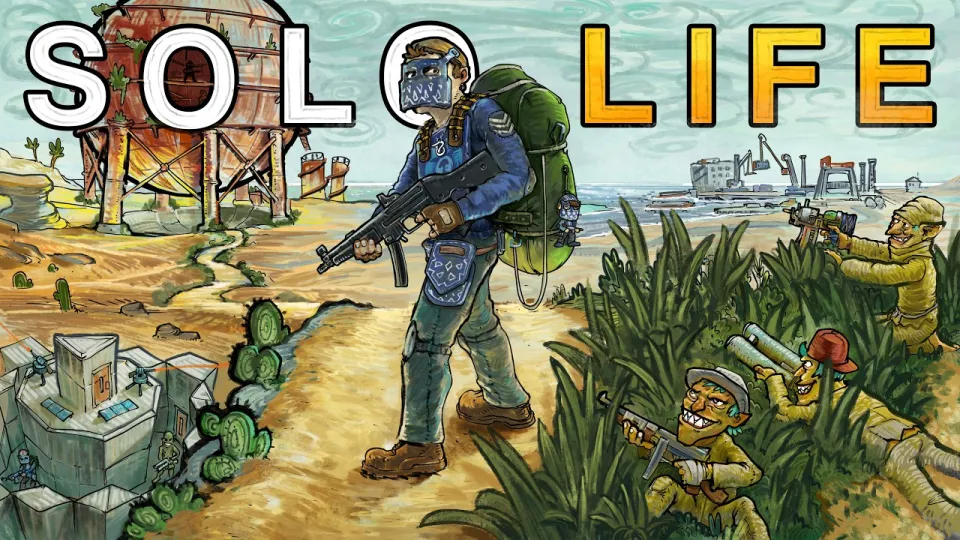
Video: Rust - THE SOLO LIFE V16
Need articles like this for your video? They help promote it on YouTube and Google — order them in the Telegram bot @sat_sit_bot. Articles with your video embedded are written and posted by the bot itself — on popular topical sites (no ads). Your first 50 articles are free.
· based on the channel Blooprint
Key takeaways
- Solo Life V16 is the sixteenth entry in Blooprint's long-running solo series and the follow-up to A Solo's Journey 4.
- The episode's core premise: one player holds an OP monument solo while several angry neighbors try to push him off it.
- The video is sponsored by War Thunder, with a free signup link for PC, console and mobile players.
- Key moments viewers flagged: a one-tap eoka kill, a Willjum-style starter base, an LR-8 sight edit and a two-solo raid defense.
- A friendly neighbor who helps during the raid defense becomes the episode's breakout character and a fan favorite.
Solo life in Rust means one player doing everything alone — farming, building, holding a monument, defending a base and raiding — and the sixteenth entry of Blooprint's series shows exactly that: a single player holding an OP monument while several angry neighbors try to take it from him. The video, published on the Blooprint channel, is a full solo wipe compressed into one episode, and it doubles as a practical look at how one player survives when the whole server knows where he lives. You can pick up War Thunder for free through the sponsor link used in the episode, which also supports the channel.
What is Rust solo life and why does it still work as a format
Rust solo life is the discipline of playing a full wipe without teammates, and it works as a watchable format because every decision has a visible cost. A solo has no one to farm for him, no one to hold a door while he loots, and no one to call when a raid starts at 3 a.m. server time. That constraint is the whole appeal: when a solo player holds a monument, every fight is a fight he chose or failed to avoid.
Blooprint has built a series around that constraint, and Solo Life V16 lands right after A Solo's Journey 4, a scheduling choice that surprised regular viewers who expected a longer gap between solo projects. The structure stays the same across entries — early wipe progression, a contested monument, a base that attracts attention, and at least one raid defense — but the details change because the neighbors change.
For anyone learning the game, the format is also a checklist. A solo wipe in Rust usually moves through these stages:
- Fast early progression on a low-population part of the map, gathering scrap and basic components.
- A starter base that is cheap enough to lose and hidden enough to survive the first night.
- A monument push — the point where a solo player starts contesting loot spawns that groups also want.
- Base expansion and crafting, including weapons that make solo PvP realistic.
- Raid defense, because a base that looks profitable eventually gets tested.
- Counter-raids or offline-proofing, depending on how much time the wipe has left.
Solo Life V16 is built around stage three and stage five, and the friction between them is the episode's spine. Holding a monument solo is not just a PvP flex; it is an economic decision, because monument loot is the fastest way for one player to close the gap with groups of three or four.
How one player holds a monument alone in Rust
Holding a monument alone in Rust comes down to controlling the approach, not the loot room. A solo player cannot out-DPS a group in an open fight, so the work happens before contact: knowing the crate timers, rotating between puzzle rooms and the exit, and leaving before the counter-push arrives instead of after.
In the episode, the monument becomes a neighborhood problem. Multiple players want the same loot, and the solo player's advantage is that he is not splitting profit three ways — every crate he opens is his. The disadvantage is equally simple: he cannot be in two places, so every second spent looting is a second not spent watching a flank.
The practical rules that make a solo monument hold work:
- Build close enough to contest the monument but far enough that the walk back with loot is not a death sentence.
- Use the monument's verticality and cover instead of open ground; groups win open ground.
- Bank loot early and often, because a solo carrying a full inventory is a solo about to lose it.
- Treat every kill as a warning, not a victory — a dead group member is a group that now knows your route.
Viewers picked up on smaller details too. A one-tap eoka kill early in the episode got its own running joke in the comments, and a starter base build drew comparisons to another well-known Rust creator's signature setup. Those moments matter because they show the solo economy in miniature: a cheap primitive weapon and a cheap base are how a solo player stays in the wipe long enough to matter.
Base building and the starter that keeps a solo alive
A solo base in Rust exists to buy time, and the best starter bases are the ones that look like less than they are. The episode leans on that logic: cheap materials, a compact footprint, and enough storage discipline that a single bad night does not end the wipe.
The Willjum-style starter that viewers spotted is a good example of the philosophy. It is not designed to survive a determined group with rockets; it is designed to survive the first forty-eight hours, when most neighbors are still using primitive weapons and sheet metal doors. That window is where a solo player either builds momentum or gets farmed.
A few principles apply to any solo base in Rust, regardless of the wipe:
- Separate your loot from your spawn point so a door camp does not end with a free inventory.
- Keep a second, smaller stash away from the main base for emergency rebuilds.
- Upgrade doors before walls — most early raids go through doors, not through stone.
- Do not expand until you can afford to lose the expansion.
Raid defense when the neighbors arrive together
The raid defense is the episode's centerpiece, and it is the moment the solo format earns its tension. Two solo players end up working together during the defense, a detail viewers called out as the best sequence in the video, and the friendly neighbor who shows up to help became the breakout character of the episode.
That cooperation is not a contradiction of the solo format; it is how solos actually survive in Rust. A solo player does not need a clan to defend a base — he needs one competent neighbor who also does not want the block to fall. The comments make the point clearly: the helpful neighbor was described as unusually good at the game, and multiple viewers asked for a duo run with him in a future episode.
Other viewers noted the strategic cost on the attacking side. A group of three spending ten to twenty minutes pressuring one solo player is a group losing farm time, raid time and momentum elsewhere on the map. That trade is the quiet advantage of playing solo: you have nothing to coordinate, so every minute you force a group to waste is a minute they cannot spend on a bigger target.
Editing also shaped how the defense reads. The LR-8 sight sequence drew praise for its clarity, and the night-time footage drew the opposite reaction — several viewers joked that night vision was activated and they still could not see anything. That is a fair criticism of dark scenes in Rust footage, and it is worth knowing before you plan a night raid of your own.
Common questions from solo players answered
Solo players watching the episode raised the same practical doubts that come up in every Rust wipe, and they are worth answering directly. The first is time: a solo wipe is slower than a group wipe, and the episode's pacing reflects that, with long stretches of farming between fights.
The second is diplomacy. The comments around the friendly neighbor show that reputation matters more than most solos admit — a player known for not backstabbing gets help when a raid starts, and a player known for door camping does not. The third is raid selection: a solo should raid targets he can finish in one session, because an unfinished raid is a counter-raid invitation.
The fourth is the language barrier, which came up in the comments around non-English-speaking neighbors. Rust is a global server game, and a solo who can communicate even badly — or who can read intent from movement — has a real edge over one who treats every accented voice as hostile. Several viewers from Spanish-speaking regions noted how often those encounters turn into the most memorable parts of a wipe.
Why the solo format keeps pulling viewers back
The solo format keeps working because it removes the part of Rust that is hardest to watch: downtime. In a group wipe, half the footage is coordination — who farms, who crafts, who guards. In a solo wipe, every action belongs to one person, so the pacing is tighter and the stakes are easier to follow.
That is also why the series has lasted sixteen entries. The map changes, the neighbors change, and the loot changes, but the question stays the same: can one player hold ground against people who have more time, more hands and more rockets? Solo Life V16 answers it with a monument hold, a starter base, a raid defense and one very good neighbor.
Useful links
- War Thunder free signup, PC and consoles: https://wtplay.link/blooprint
- War Thunder mobile: https://wtm.game/blooprint
- Blooprint on Twitch: https://www.twitch.tv/blooprint
- Blooprint on Kick: https://kick.com/blooprint
- Blooprint on TikTok: https://www.tiktok.com/@blooprintgames
Final thoughts on Solo Life V16
Solo Life V16 is a compact argument for playing Rust alone: the monument hold is the goal, the starter base is the insurance, and the raid defense is the bill that eventually comes due. Blooprint builds the episode around those three beats and lets the neighbors supply the chaos, which is why the friendly helper and the one-tap eoka moment landed harder than any big raid. If you want to try the same run, start with a cheap base, contest one monument, and keep a neighbor on good terms — that is the whole solo formula. And if you want to support the channel while trying something new, grab War Thunder for free through this link. The Blooprint channel is the place to follow the rest of the series.
Source: Rust - THE SOLO LIFE V16 · Markdown version
Questions & answers
How do you hold a monument solo in Rust without getting pushed off?
Control the approach instead of the loot room. Learn crate timers, rotate between rooms and the exit, bank loot between runs, and leave before a counter-push forms rather than after. A solo player wins by not being where the group expects him.
Is it worth playing Rust solo when groups dominate the server?
Yes, if you pick your fights. A solo has no coordination overhead, so every minute a group spends pressuring you is farm time they lose elsewhere. Cheap starter bases, one contested monument and careful raid selection keep a solo wipe viable.
Why do solo players team up during a raid defense?
Because a neighbor who does not want the block to fall is a free extra gun. Temporary cooperation during a defense is common in Rust and does not break the solo format — it is often the difference between losing a base and keeping it.
What should a solo player raid first?
Targets you can finish in a single session with materials you already have. An unfinished raid invites a counter-raid, and a solo has no second crew to hold the breach while he finishes the job.